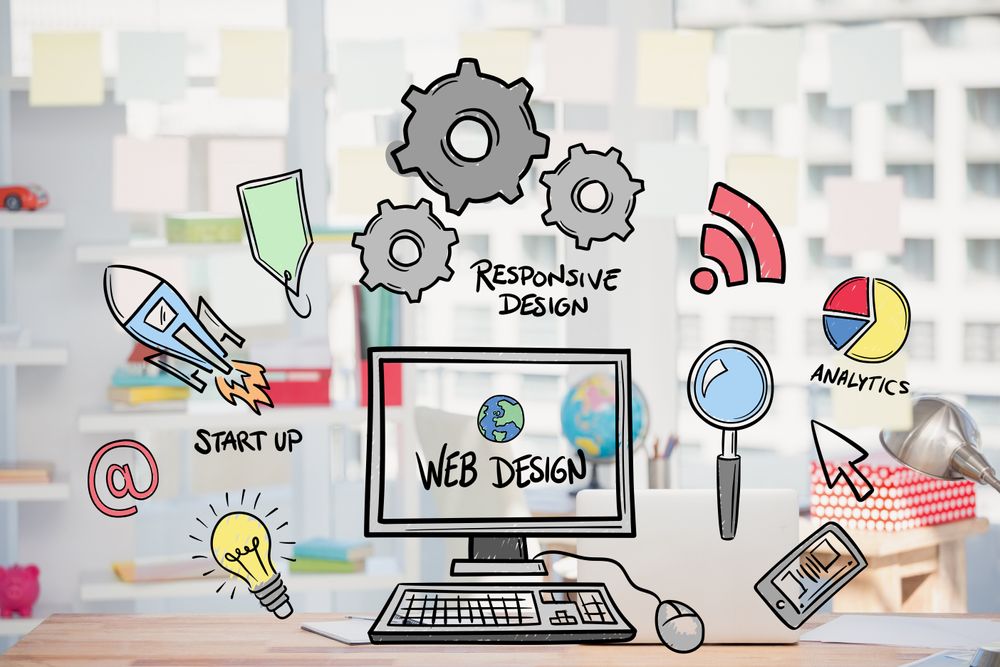
Exploring Imaginative Trends in Web Design for Modern Companies
The landscape of web design is continually progressing, showing the dynamic demands of modern companies. Recent trends highlight a choice for minimalism, vibrant typography, and appealing interactivity. Firms progressively focus on user experience through mobile-first concepts and personalized material. In addition, a focus on sustainability is getting grip. Comprehending these trends is important for organizations intending to stick out in a jampacked market. What implications do these changes hold for the future of digital involvement?
Welcoming Bold Typography
Bold typography has emerged as a specifying element in contemporary web design, capturing attention and conveying messages with striking clearness. This pattern focuses on aesthetically impactful message that enhances user engagement and brand name identification. Developers often make use of special typefaces and extra-large fonts to develop a hierarchy, assisting customers with content effortlessly.
The tactical usage of strong typography enables efficient narration, enabling brand names to connect their values succinctly. It offers not only visual objectives yet likewise functional ones, as it enhances readability throughout tools and screen sizes.
As web sites contend for user interest, strong typography stands out in a saturated electronic landscape. Its flexibility allows designers to try out contrasting designs and colors, further amplifying its efficiency. Eventually, embracing bold typography stands for a shift in the direction of more meaningful and communicative web design, fostering a deeper connection between brands and their target markets.
The Surge of Minimalist Design
As digital environments end up being significantly messy, the surge of minimal layout supplies a rejuvenating alternative that prioritizes simpleness and performance. This layout ideology strips away unneeded elements, permitting content to take facility stage. By concentrating on clean lines, sufficient white area, and a limited shade combination, minimal style enhances user experience and boosts navigating.
Organizations adopting this pattern purpose to share their brand name message plainly and effectively, fostering a feeling of calm and clarity. The lack of diversions helps customers concentrate on crucial information, resulting in boosted involvement and conversion rates. Furthermore, minimal design aligns well with mobile-first techniques, making certain that sites remain accessible and easy to use across various gadgets.
Inevitably, the surge of minimalist style reflects a wider change towards prioritizing user demands and choices, making it an effective tool for contemporary services looking to make an enduring impact in the electronic landscape.
Immersive Animations and Interactivity
While several web designers accept minimalist aesthetic appeals, one more compelling fad getting traction is the use of immersive computer animations and interactivity. This strategy enhances user engagement by creating appealing experiences that draw visitors into the material. Designers employ dynamic components such as computer animated histories, scrolling impacts, and interactive infographics to communicate intricate ideas in an easily accessible fashion.
These animations not just provide aesthetic passion yet likewise overview individuals via the navigating procedure, making interactions much more user-friendly. For instance, float effects and computer animated shifts can motivate customers to explore further, causing increased time invested in the site.
This trend straightens with the more comprehensive motion in the direction of narration in internet design, where animations offer as narrative gadgets that convey brand name messages successfully. By integrating immersive animations and interactivity, businesses can differentiate themselves in a crowded online landscape, ultimately boosting user satisfaction and brand loyalty.
Mobile-First Style Principles
Mobile-first layout principles highlight prioritizing user experience by making certain sites operate perfectly on smaller sized screens. This technique includes responsive layout methods that adapt to different device sizes while keeping aesthetic stability. Additionally, it concentrates on touchscreen navigation design, boosting use for mobile users.
Focusing On User Experience
Just how can designers effectively prioritize user experience in a progressively mobile-centric globe? Highlighting mobile-first style concepts is important, as individuals primarily engage with sites with mobile phones. This technique motivates developers to streamline web content, ensuring it is quickly obtainable and accessible on smaller displays. Secret techniques consist of simplifying navigation, decreasing load times, and employing touch-friendly components that improve interactivity. In addition, focusing on clear typography and intuitive layouts can greatly enhance user satisfaction. Developers must constantly gather user comments to refine their approaches, adapting to developing user requirements and choices. By focusing on these components, services can create an appealing digital experience that fosters loyalty and drives conversions, inevitably aligning with the expectations these days's mobile individuals.
Responsive Format Methods
Developers embrace responsive design methods to create flexible and adaptive web experiences that provide to various screen dimensions. This approach prioritizes mobile-first design principles, guaranteeing peak capability on smaller tools prior to scaling up for bigger screens. By using fluid grids, adaptable images, and media questions, designers can preserve a natural aesthetic identification across all systems. This technique not only boosts user interaction but likewise improves search engine positions, as mobile-friendly websites are favored by search algorithms. Furthermore, responsive layouts allow organizations to reach a broader target market, suiting individuals on mobile web design company phones, desktop computers, and tablet computers alike. In general, executing these strategies is vital for modern-day web design, making sure that services remain competitive in an ever-evolving electronic landscape.
Touchscreen Navigation Design
With the increase of mobile devices, touchscreen navigation has ended up being an essential facet of web design. Developers are progressively embracing mobile-first principles to improve user experience and involvement. agency for web design. Effective touchscreen navigation prioritizes bigger buttons and instinctive gestures, permitting customers to connect easily with web content. This method minimizes stress and encourages exploration, as customers can navigate seamlessly with their fingers. In addition, integrating swipe gestures and faucet functionality deals with the all-natural actions of mobile users. Responses systems, such as aesthetic hints and animations, enhance usability additionally by verifying activities. As touchscreens control user communications, utilizing these style components not only lines up with modern assumptions but additionally fosters a much more delightful and obtainable browsing experience for all users
Personalized User Experiences
What makes a user feel truly engaged on a site? The response often depends on personalized user experiences. By customizing web content and navigating to specific choices, services can create a meaningful link with their audience. This personalization can be attained through various methods, such as evaluating user behavior, utilizing cookies, and offering personalized referrals based on previous communications.
Shopping platforms that suggest products based on surfing background not just enhance user experience however also raise conversion rates. Including vibrant material that adapts to the user's location or time of day can better enrich interaction.
Furthermore, customized greetings or messages can make customers really feel valued and comprehended. As modern services venture to stand apart in an affordable digital landscape, embracing individualized user experiences comes to be crucial, promoting loyalty and motivating repeat check outs. Ultimately, this approach changes a standard internet site into an interactive system that resonates with its audience.
Sustainability in Web Design
As the digital landscape proceeds to develop, the relevance of sustainability in web design has actually acquired significant attention. Developers are progressively mindful of the ecological impact their creations can have, prompting a shift towards eco-friendly techniques (web design company). Sustainable web design focuses on optimizing internet sites to minimize energy usage and carbon footprints. Techniques include utilizing minimalistic design principles, maximizing pictures, and using efficient coding practices to boost loading rates
In addition, the selection of organizing providers plays an essential role; numerous developers are currently deciding for eco-friendly holding services powered by renewable resource. By prioritizing availability and user-friendly navigation, lasting styles likewise satisfy a broader target market, boosting usability. This aware method not just allures to environmentally-minded consumers but also adds to the general durability and efficiency of web sites. Eventually, sustainability in web design shows an expanding fad in the direction of liable electronic practices that align with modern organization values.
Regularly Asked Questions
How Can I Select the Right Color Scheme for My Website?
To select the right color scheme for a web site, one must consider the brand's identification, target audience, and emotional effect. Using color concept and screening combinations can enhance user experience and aesthetic appeal substantially.
What Are the very best Devices for Prototyping Website Design?
The very best tools for prototyping internet styles include Figma, Map out, Adobe XD, and InVision. These platforms provide intuitive user interfaces, partnership attributes, and considerable libraries, making them excellent for designers to produce and refine their ideas successfully.
Exactly how Do I Measure the Efficiency of My Web Design?
To gauge web design effectiveness, one must examine user involvement metrics, conversion prices, and use comments (Web Design services). A/B testing and heatmaps can likewise offer understandings into user behavior, leading needed changes for enhanced performance and user experience
What Are Typical Web Design Mistakes to Prevent?
Common web design mistakes include messy designs, bad navigation, slow packing times, absence of mobile optimization, poor comparison, and overlooking user feedback. Preventing these pitfalls boosts user experience and raises general efficiency of the web site.
Just how Frequently Should I Update My Web Site Design?
A website style need to be updated every a couple of years, or faster if considerable modifications in branding or innovation occur. Regular updates maintain the site fresh, practical, and lined up with current user expectations.